Guide · Pre-departure · 4 min read
Pre-departure checklist for Nepali students: the last 4 weeks before you fly.
The last month before you fly is mostly paperwork and money, not packing. Keep your passport, visa grant or eVisa, CoE or CAS, offer, insurance and accommodation proof in your hand luggage, with copies online. Have most of your money already in your account abroad, carry a little cash and declare anything over the limit, and declare all food you bring. Then book a flight that lands before orientation week, not on day one of teaching.
The short version
- Hand luggage: passport, visa grant or eVisa, CoE or CAS, offer, insurance, accommodation proof, transcripts, NOC and SWIFT copies.
- Money: most of it already in your account abroad or blocked account. Cash from Nepal: the general limit reported for 2025/26 is USD 3,000.
- Declare cash of AUD 10,000, £10,000 or €10,000 or more on arrival, and all food in Australia.
- Arrive before orientation. Australia lets you enter up to 90 days before your course; the UK, usually up to 1 month before a long course.
- Medicines in their original packets, with a prescription or doctor's letter in English.
Four weeks out: week by week
| When | Do | Check |
|---|---|---|
| 4 weeks before | Book the flight; confirm your room in writing | The landing date is before orientation |
| 3 weeks before | Move living money abroad or into your blocked account | Your bank’s current rules and the SWIFT copy |
| 2 weeks before | Pre-departure briefing; buy a plug adapter; health check-up | Medicines and prescriptions |
| 1 week before | Scan every document; pack; tell your bank you’re travelling | Your card works abroad |
| The day before | Weigh the bags; print the arrival address | Your hand luggage folder |
Your hand luggage folder
| Document | Why you need it on arrival |
|---|---|
| Passport | Valid for your whole stay, with your visa or permit linked |
| Visa grant letter (Australia), eVisa share code (UK), visa sticker or permit (Europe) | Border officers may ask |
| CoE (Australia) or CAS (UK); admission letter (Europe) | Proof of your course |
| Offer letter and fee receipts | Enrolment |
| Health insurance: OSHC (Australia), or your European policy | From the day you land |
| Accommodation confirmation | Border questions; Anmeldung or BSN registration in Europe |
| Original transcripts and certificates | Enrolment, and later job applications |
| NOC and SWIFT copies | Later payments from Nepal, and renewals |
| Passport photos, 4 to 6 | Student cards and permits |
| Prescriptions, in English | With your medicines |
Scan every page to your email or cloud storage before you leave home. If a bag is lost, the scans are what you’ll use.
Money on the day you land
| Where | Arrive with |
|---|---|
| In your account abroad, or a blocked account | Most of your first-term living money |
| On a card that works abroad | A month’s buffer |
| In cash | Enough for the first 2 or 3 days: transport, a SIM, food |
| Rule | Limit |
|---|---|
| Cash out of Nepal (reported, 2025/26) | USD 3,000 general limit; ask your bank |
| Declare on arrival in Australia | AUD 10,000 or more, in any currency |
| Declare entering or leaving Great Britain | £10,000 or more |
| Declare entering or leaving the EU | €10,000 or more |
Declaring isn’t paying tax. It’s a form; not declaring can mean the money is taken.
Food and medicine
Australia is the strictest. Declare all food on your Incoming Passenger Card. Officers check it and either let it through or take it, without a fine, if you declared it. Undeclared items can mean a fine.
| Usually fine if declared | Usually refused |
|---|---|
| Packed spices, tea, instant noodles, sealed snacks | Meat of any kind, including sukuti and dried fish |
| Pickles in sealed jars (checked) | Fresh fruit, vegetables and seeds |
| Homemade dairy, ghee in some cases |
The UK and Europe are less strict, but meat and dairy from outside the EU are generally banned there too.
Medicines: carry them in the original packets, with a prescription or doctor’s letter in English that names the medicine and dose. Bring a month’s supply; register with a doctor in your first week for more.
Packing, simply
| Pack | Buy after you land |
|---|---|
| A warm jacket and layers for your first winter | Bedding, pillow, towels |
| One formal outfit, for interviews | Kitchen pots and plates |
| A plug adapter (Australia type I; UK type G; most of Europe type C or F; Denmark type K) | Toiletries |
| Comfortable shoes you’ve walked in | A local SIM |
| A small cooking kit of spices you can declare | Winter boots, in Europe |
| Your laptop and charger |
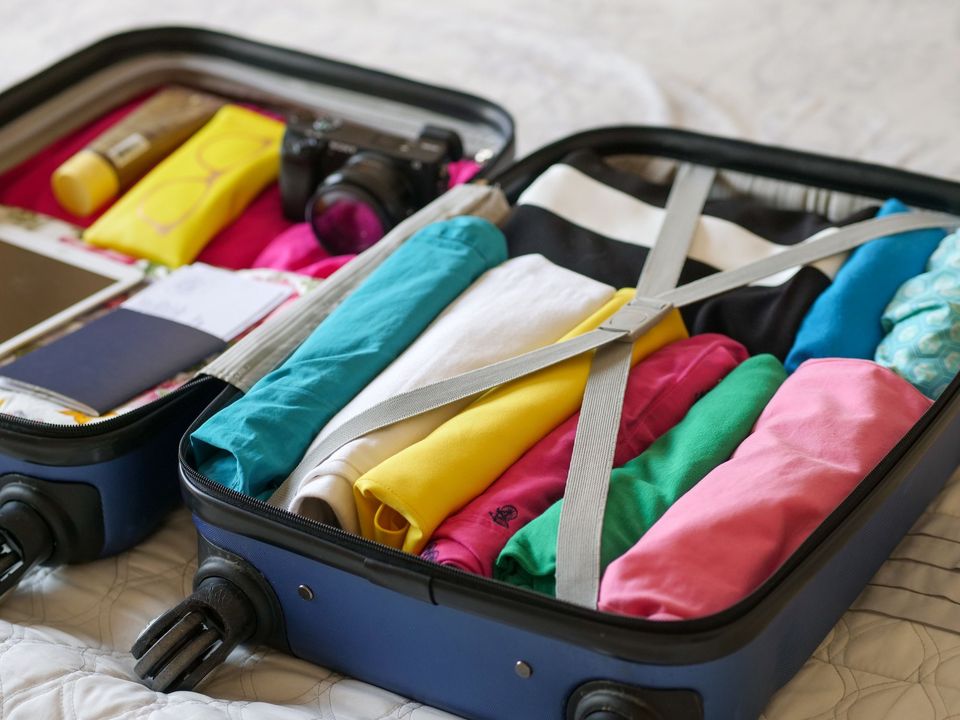
Check your airline’s allowance. Most students pack too much and pay for it at the airport.
When to land
| Country | Arrive |
|---|---|
| Australia | Up to 90 days before your course; we suggest 1 to 2 weeks before orientation |
| United Kingdom | From your visa’s start date, usually up to 1 month before a long course |
| Germany, Netherlands, Nordics, Belgium, Cyprus | From your visa’s start date; 2 weeks before term gives time to register and find your feet |
Landing a day before teaching means missing orientation, where enrolment, the student card and the bank account get sorted.
From our files. At every pre-departure briefing we ask students to empty their hand luggage folder on the table and check it against the list above. Most often missing: the English prescription for their medicines, and a printed address of the first night’s room. Both take ten minutes to fix in Kathmandu and a day to fix abroad.
Our view
Spend the last month on the folder and the money, not the suitcase. Then read your first week abroad on the plane. Your counsellor calls on day 1, and 186 of our graduates abroad take calls from new students in their city.